
BL-232 Scarf RFQs: Distinguish the Two Listings
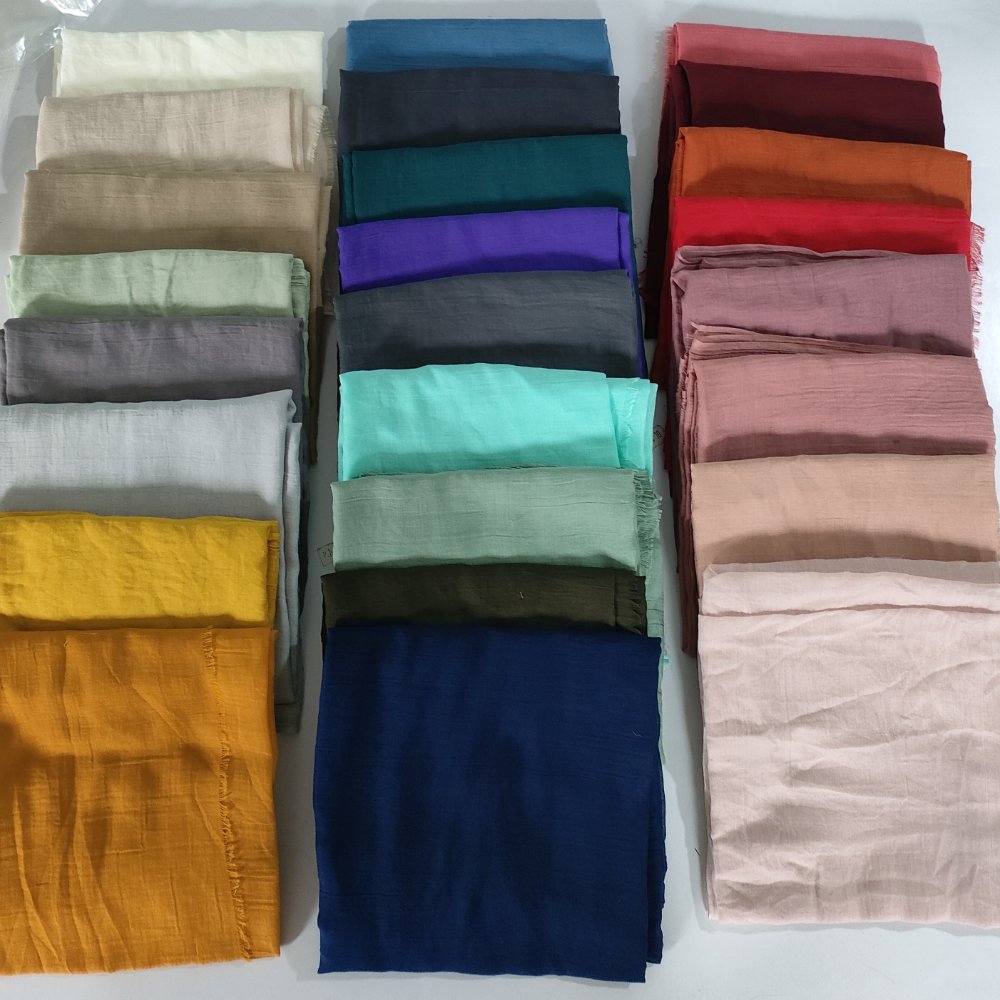
Plain BL-232 gallery reference. The colour display does not identify a supplied assortment or include the separately listed rhinestone version.
Identify a BL-232 scarf enquiry with the full listing name and product URL, not the shared number alone. Wenyu has an 80s Polyester-Cotton BL-232 listing and a separate Polyester-Cotton with Hot-Fix Rhinestones BL-232 listing. Both state 90cm × 180cm, while their weight fields are 80g and 105g respectively. Keep those records separate and ask the supplier to confirm which version each response covers.
For buyers sourcing wholesale dyed scarfs, a short article code can be convenient until it appears on more than one offer. An enquiry that says only BL-232 leaves the decoration and associated item record unresolved. The practical task is to carry the correct version from the initial request into the supplier response, sample label and later order line.
Retain both full catalogue identities
The 80s Polyester-Cotton BL-232 page lists Material: 80s Polyester-Cotton, Size: 90cm × 180cm and Weight: 80g. Use that full reference for the plain-page enquiry rather than borrowing an image or weight field from the decorated listing.
The hot-fix rhinestone BL-232 page lists Material: 80s Polyester-Cotton with Rhinestones, the same stated size and Weight: 105g. Its full title identifies the decorated offer. The shared code and dimensions do not establish that the two pages describe the same finished item.
Catalogue field
Plain-page reference
Hot-fix reference
Shared article wording
BL-232
BL-232
Material description
80s Polyester-Cotton
80s Polyester-Cotton with Rhinestones
Listed size
90cm × 180cm
90cm × 180cm
Listed weight
80g
105g
Version identity
Full plain-page title and URL
Full decorated-page title and URL
These are observed catalogue entries. Request the current offered specification for each selected version. The two weight fields are not a measured decoration-mass comparison, and the short material wording does not provide a complete fibre-percentage declaration.
Another plain-page gallery view. Keep the image linked to its actual product URL rather than identifying it by the shared number alone.
Add a buyer version field without inventing a SKU
Use a separate buyer field such as plain-page request or hot-fix-page request beside BL-232. If the purchasing system requires a temporary line code, label it as a buyer reference. Ask the supplier to provide its own identifier for the offered version and retain both references on the response sheet.
Do not rename either catalogue code as though the supplier has issued a new SKU. The buyer’s extra field is a communication aid that resolves the duplicate number in this enquiry. Keeping the full URL beside it lets another colleague retrieve the intended source without interpreting an unexplained internal abbreviation.
Shared catalogue code retained as written.
Full listing name and exact URL.
Buyer version or temporary line reference.
Supplier-confirmed offered identifier.
Selected colour and requested quantity by version.
Request a response against the chosen version
Place the requested version, colour and quantity on the same line. Ask the supplier to repeat the offered item identity before answering the other questions. If both versions are being considered, request separate responses so a commercial figure or sample description cannot drift from one to the other.
Where the supplier proposes a change, ask it to identify the affected version explicitly. A reply that says BL-232 available does not settle which listing it answers. Keep alternatives separate until the buyer accepts them, and request the current commercial conditions for each proposed item rather than carrying terms across the shared code.
The hot-fix BL-232 listing shows a decorated reference. Its appearance does not confirm attachment performance or the contents of a plain-version order.
Carry the identity into samples and order records
Ask for each sample to be identified with the supplier reference and the corresponding buyer version line. At receipt, connect the sample to its product URL and written offered specification. This prevents a correctly numbered BL-232 sample from being accepted against the wrong version simply because the number matches.
Before an order is confirmed, repeat the full item identity in the final schedule and any requested pack description. Keep a later decoration change or substitution visible as a revision. The record answers which finished article is requested; separate surface-layout, shade, care and performance reviews retain their own scope.
Give receiving staff the ordered version name, supplier identifier and a linked appearance reference beside the quantity to be checked. Ask how those details will appear on the proposed contents list. If a carton record uses only BL-232, request the missing version description before treating the contents as fully identified. Where an item differs from the order, record whether the concern is the version, colour or quantity and attach a photograph of the received reference. This lets the supplier answer a specific discrepancy without guessing which of the two BL-232 listings the buyer intended.
Frequently asked questions
Is BL-232 enough to identify the requested scarf?
Use the full listing name and URL as well. The observed catalogue uses the number on both a plain polyester-cotton listing and a separate hot-fix rhinestone listing.
Do matching dimensions make the offers interchangeable?
The listed dimensions match, but the material descriptions and weight fields differ. Request the exact offered version rather than treating one field as the complete item identity.
Can the buyer create a temporary version code?
Yes, as a clearly labeled buyer reference. Keep it separate from the supplier’s actual identifier and preserve the product URL so its meaning remains traceable.
How should the enquiry be submitted?
Send both product links, the selected version lines and quantities through the Wenyu contact page, asking the supplier to identify which version every response covers.
Scarf SourcingProduct IdentificationRFQ PreparationWholesale Purchasing