
Scarf Material RFQs: Define Sea-Island Crinkle
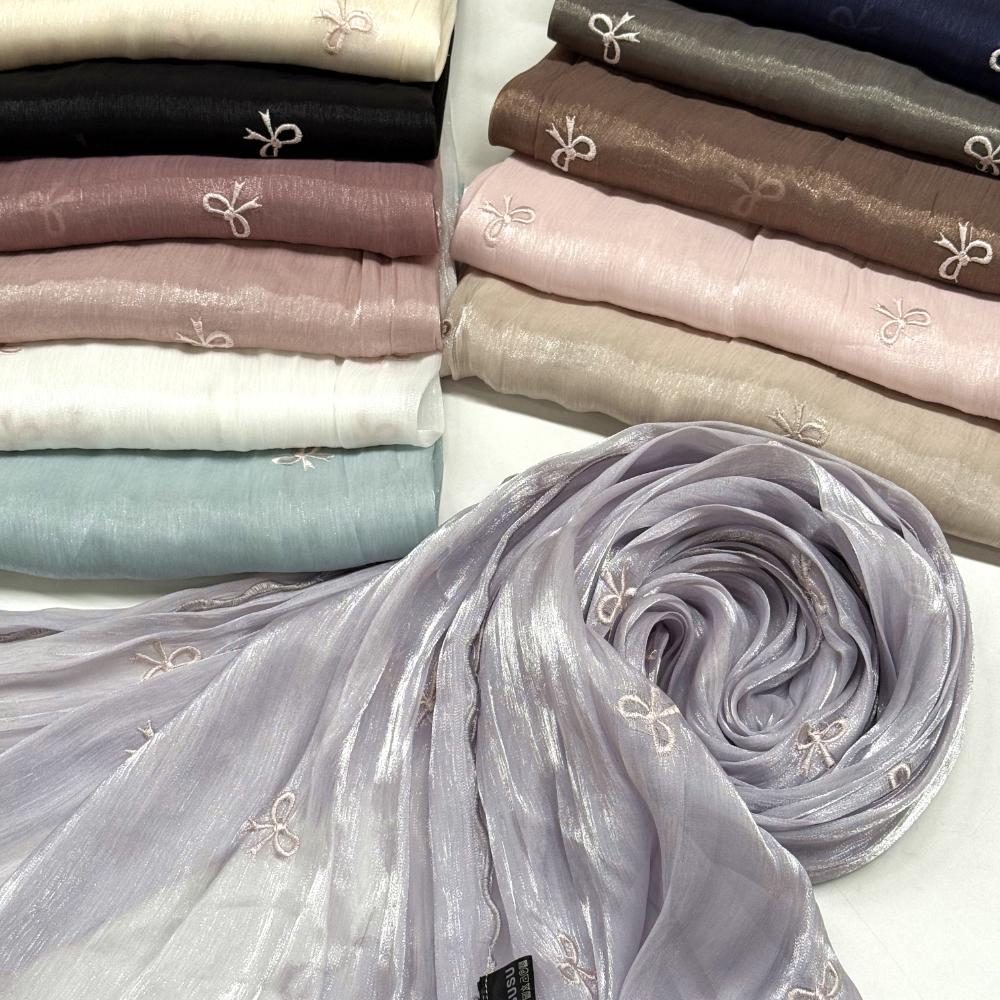
K1003 gallery appearance with embroidery and a reflective fabric surface. Neither the finish nor the photograph establishes a fibre composition.
For a K1003 scarf material enquiry, preserve “Sea-Island Crinkle” as the catalogue description and request the main fabric’s generic fibre composition separately. Wenyu’s K1003 page uses that term in its Material field, but does not name constituent fibres or percentages. Ask which component the returned declaration covers and request a separate description of the embroidery thread where your purchasing specification requires it.
This gives a buyer a more complete material record than copying a descriptive fabric name into every component field. The product combines a crinkle-fabric presentation with embroidery, and the gallery includes several motif examples. Keep the selected reference identifiable while asking what the supplier actually proposes to supply. Do not fill a missing composition using another scarf’s description.
Keep the source wording and fibre answer separate
Start with the Sea-Island Crinkle Embroidered Scarf K1003 page. Record its product code and the exact Material entry, “Sea-Island Crinkle.” The page lists 70cm × 200cm and 100g as additional product fields. Use these to identify the reference being discussed, while keeping the requested fibre information in its own response field.
Ask the supplier for the generic fibre name or names and the declared percentages for the main fabric of the offered version. Retain the original catalogue wording alongside that answer. If the supplier uses another descriptive trade name in reply, ask for the accompanying composition information rather than silently treating the second name as a complete material declaration.
Identify the component covered by each declaration
Ask whether the returned composition applies to the scarf’s base fabric, its embroidery thread or another defined component. A statement covering the main fabric does not automatically describe the decorative stitching. Have the supplier identify the component scope explicitly so the purchasing team knows what has been answered and what remains open.
Material record
Source starting point
Requested clarification
Main fabric description
Sea-Island Crinkle
Generic fibre names and declared percentages
Embroidery
Product title and gallery show embroidered references
Thread material for the selected offered version
Selected appearance
Several gallery motifs and colours
Exact reference to which the answer applies
Sample link
No identified buyer sample on the page
Sample identifier matching the declaration
Where another material component is relevant to the actual offered item, ask the supplier to name it and state whether it needs a separate entry in your specification. This is a request to complete the component record, not an assertion that the scarf includes an unseen lining, backing or accessory. Keep the scope tied to the selected version.
Another K1003 gallery example. Different visible motifs remain selection references; their thread material is not established by colour or appearance.
Keep a neighbouring scarf’s material out of this answer
The P193 Modal Dirty-Dye scarf is a separate product whose Material field says Modal. That entry should remain attached to P193. It does not define the K1003 fabric merely because both products appear in Wenyu’s range or have similar folded catalogue presentations. Use each product’s own supplier response in a comparison.
Likewise, a glossy or crinkled surface does not independently establish a fibre name, content percentage or geographic origin. If origin information is part of the buyer’s requirement, request it as a separate field with the applicable scope. Keep a fabric description, fibre declaration and origin answer distinguishable rather than derive all three from “Sea-Island.”
Preserve the exact K1003 catalogue material term.
Request the main fabric’s named fibre composition.
Identify the embroidery-thread declaration separately where required.
Link the supplier answer to the selected appearance and sample.
Link the response to the proposed sample
Give the sample request an identifier and attach the selected product and motif reference. Ask the supplier to confirm that its written material answer represents the offered sample. Retain the response date and version with the purchasing file. The sample’s appearance is useful for identifying the proposal, but looking at the fabric does not independently verify the declared percentages.
The page says colour, size, embroidery pattern and packaging customisation are available. If the supplier proposes a change to the embroidery or fabric for your enquiry, ask whether the material declaration changes too. Keep the new proposal separate until reviewed. A familiar product code should not conceal a different component description in the final offer.
If your purchasing requirement calls for supporting material evidence, specify what is needed for the actual offered item and keep it with the declaration. Do not describe a catalogue entry or a visual sample as a test result. Record the decision scope so accepting the appearance does not close an unanswered composition question.
Send an answerable material enquiry
A direct request can read: “For the linked K1003 scarf and selected embroidery reference, please define the generic fibre composition of the main fabric described as Sea-Island Crinkle. State the component covered by each percentage entry and identify the embroidery-thread material separately. Please link the answer to the offered version and matching sample, and flag any changed construction.”
Send the product and selected gallery reference through the Wenyu contact page. Buyers comparing wholesale Seabird Crinkle Embroidery scarf references can then retain a clear material response. Sample arrangements, availability and commercial terms remain matters for the current direct enquiry.
Separate floral-embroidery gallery presentation. It illustrates the range, rather than confirming one shared construction or an available mixed assortment.
Frequently asked purchasing questions
Does Sea-Island Crinkle name the constituent fibre?
The cited Material field supplies that description without fibre percentages. Ask for the generic composition of the offered K1003 fabric.
Can P193’s Modal entry be copied to K1003?
Keep it with P193. Request K1003’s own version-specific material response.
Does the main fabric declaration cover embroidery?
Ask the supplier which component it covers and request the thread description separately where needed.
What should remain with the approved material record?
The exact product and appearance reference, component-specific supplier response, offered version and linked sample identifier.
Embroidered ScarfFabric DeclarationSea-Island Crinkle