
K-1003 Scarf Edges: Define the Finish Reference
What should a K-1003 scarf edge specification include? Identify the offered scarf, mark the edges and corners being discussed, and request the supplier description of their finish. Connect that description to clear close views and an identified physical sample. Record the accepted appearance, any exceptions and the version that the quotation represents, so that a general catalogue photograph does not become the entire edge specification.
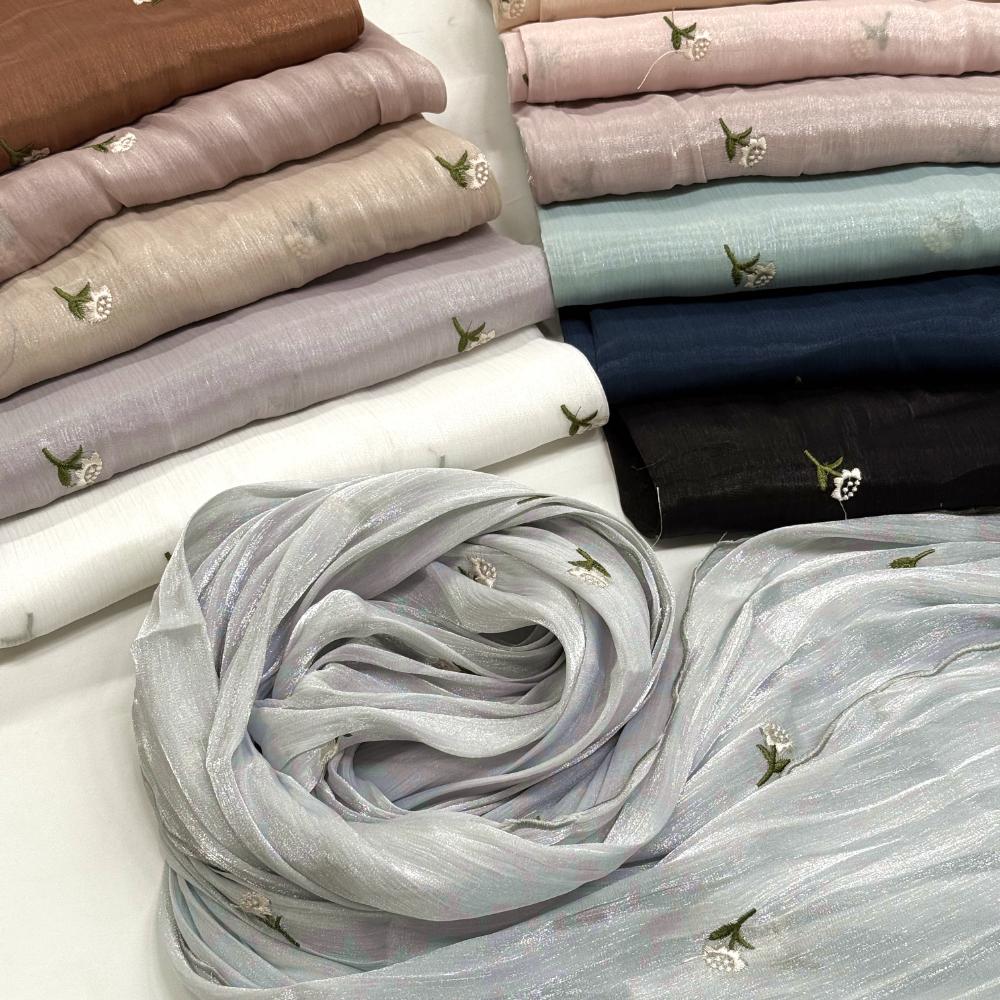
Official K1003 floral gallery composition, selected as a different physical photograph. Request the proposed edge-finish reference for the actual offered scarf.
Start with the actual offered scarf
Wenyu Scarf lists Sea-Island Crinkle Embroidered Scarf K-1003 in its scarf catalogue. The gallery presents folded and loosely coiled embroidered scarves in several arrangements. These photographs provide a useful starting reference for an enquiry, while the written listing does not define the construction of each edge or corner.
For a wholesale seabird crinkle embroidery scarf enquiry, ask the supplier to identify the proposed variant and provide a reference for the offered piece. Keep the supplier item code, selected appearance and sample identity together. A finish shown in one gallery arrangement should be linked to the proposal before the buyer treats it as an agreed order feature.
Make the purchasing question specific: which edge finish is included on this offered scarf? This creates a practical decision separate from the fabric declaration, embroidery design, finished dimensions or commercial schedule. Each of those can have its own approval record without answering what the perimeter of the supplied article will look like.
Buying field
Requested supplier response
Offered article
Supplier item reference, selected variant and the sample represented.
Edge identification
Marked views showing the relevant sides, ends and corners.
Finish description
Supplier name and explanation of the construction proposed for each edge.
Appearance reference
Close views and the identified physical reference used for comparison.
Sample decision
Accepted observations, open differences and the buyer decision scope.
Version control
A link between the quotation, reference sample and any revised finish.
Mark the perimeter before discussing a finish
Use a complete unfolded reference view to show which parts of the perimeter the enquiry concerns. Give the sides, ends and corners simple labels on that reference. This allows the buyer and supplier to discuss the same edge even when a second photograph shows a folded piece or a close view taken from another direction.
Ask whether the same proposed finish applies around the full perimeter or whether identified sections differ. If the supplier offers alternatives, request a separate description for each one. Keep those alternatives distinguishable rather than allowing a close view of one end to stand for every part of the scarf.
A marked reference is especially useful when folds conceal the edge in the catalogue. Ask for the view needed to resolve the missing detail. Avoid completing the hidden side from a similar product, and keep an unconfirmed section visible in the enquiry until the supplier identifies its proposed construction.
The exposed perimeter is an appearance reference. Ask the supplier to identify its construction and the edge of the proposed sample that it represents.
Request the construction description from the supplier
Ask the supplier what they call the offered finish and what that term describes on the proposed scarf. Request a close view that corresponds to the marked edge, with the relevant face and reverse identifiable. If a drawing or written construction reference is available for that version, keep it with the supplier response.
One K-1003 gallery photograph shows an exposed perimeter with a wavy-looking outline. That observation can guide a request for a closer reference. It does not establish a stitch method, a manufacturing sequence or a particular machine operation. Let the supplier identify the construction before using a technical process name in the order.
Where the buyer has a preferred finish, describe the desired appearance and ask the supplier to explain the proposal against it. Separate the requested feature from the supplier confirmation. This helps the purchasing team see which details were requested, which were actually offered and which differences still require a sample decision.
Make the sample comparison usable
Identify the physical sample or supplier reference before reviewing its edges. Keep the same orientation labels used in the enquiry, and note which sections were actually compared. The record should be understandable to another buyer without needing to reconstruct the discussion from an unlabelled close photograph.
Record visible differences in direct terms, such as a corner appearance that differs from the agreed reference or an edge section that has not yet been shown clearly. Ask for a supplier explanation or a revised reference where needed. Do not turn an unclear view into a rejection reason based on an assumed construction.
Agree any additional assessment separately if the order requires evidence about durability, washing or another performance property. The catalogue does not supply an edge-performance test record. A decision about the visible finish should therefore state its actual scope and leave any unperformed assessment as an open requirement.
A separate official gallery arrangement supplies product context. Confirm which offered variant and finish reference belong together.
Keep the approved finish linked to the quotation
Once the parties agree the offered finish, retain the marked perimeter reference, supplier description, supporting views and sample decision with the quotation. State which article and version they represent. This makes the approval useful when purchasing, sampling and production contacts refer to the same item at different times.
If the supplier proposes a change, ask which part of that finish reference is affected. A revised edge description or sample needs an identifiable version and a clear decision. Keep the earlier record available, so that a replacement view is not mistaken for evidence that the original offer already included the changed feature.
Apply the same discipline to an alternative catalogue variant. Confirm its own finish rather than transferring the earlier decision automatically. A concise edge reference gives both parties a concrete basis for the order discussion without mixing it with separate questions about embroidery placement, fibre content or delivery commitments.
Buyer FAQ
Can a K-1003 gallery image define the full edge finish?
Use it to locate the enquiry, then obtain the supplier description and views of the identified edges and corners of the proposed version.
Does a wavy-looking edge prove a particular stitch process?
The photograph records an appearance. Ask the supplier to identify the actual construction rather than assigning a process name from the outline.
Should one close view represent both sides and ends?
Ask the supplier which sections it represents and whether the finish is shared. Mark any section that still needs its own reference.
Does accepting the visible finish establish fray resistance?
An appearance decision and an agreed performance assessment have different evidence. Record the actual scope of the sample decision.
What belongs with an alternative or revised finish?
Keep the offered article, supplier description, marked views, sample identity and the buyer decision together under a distinguishable version.
Begin with the K-1003 scarf product reference, request the proposed edge-finish reference, and browse the scarf purchasing blog for separate specification topics.
Identify the offered scarf and mark the edges being discussed.
Connect the supplier finish description with an actual sample.
Retain the limited decision and any revised version with the quotation.
wholesale seabird crinkle embroideryB2B supplier sample record